
Andreas Baumann
(University of Vienna, PI)
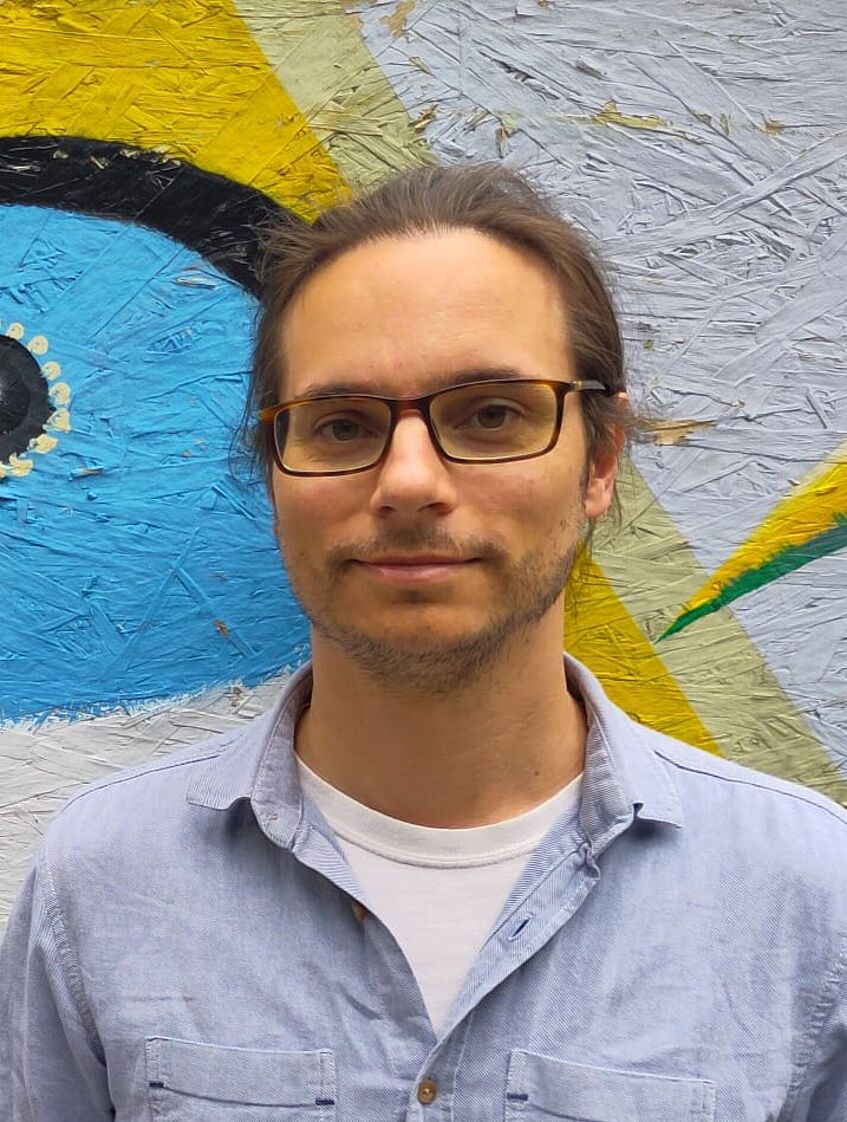
Andreas Baumann
(University of Vienna, PI)
Andreas Baumann is Assistant Professor of Digital Linguistics at University of Vienna's Department of German Studies and is guest researcher at the Austrian Center for Digital Humanities. He has been a visiting scholar at Stellenbosch and Turin, and taught at AMU Poznań. Trained in linguistics, mathematics, and cognitive science, he models language evolution and change using dynamical systems and methods from data science, linking theory with empirical analyses of historical corpora and linguistic databases. Baumann co-led projects on short-term semantic shifts in Austrian German via lexical networks and on dynamic sentiment in Austrian media, and is now PI of the DIGILINGDIV project.
Hannes Fellner
(University of Vienna, Co-PI)
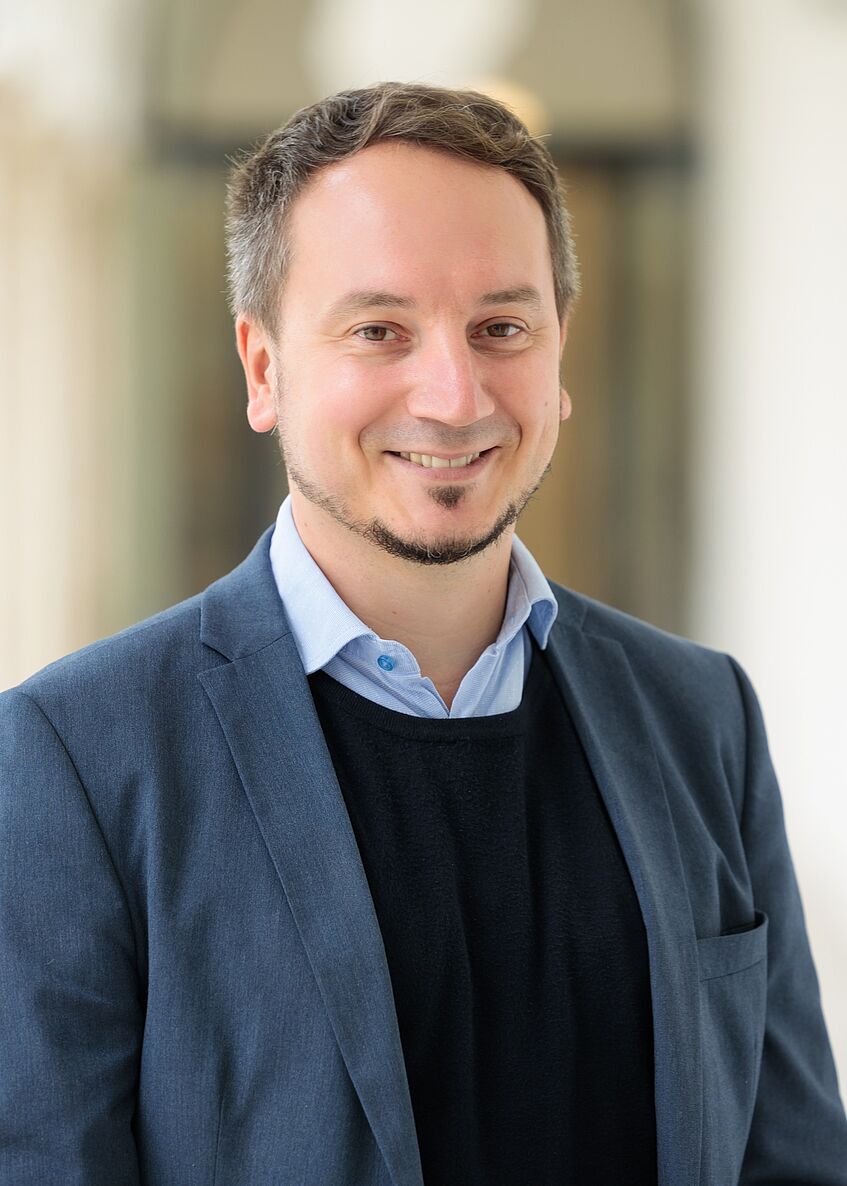
Hannes Fellner
(University of Vienna, Co-PI)
Hannes A. Fellner is Professor of Digital Corpus Linguistics in the Department of Comparative Literature and Language Studies at the University of Vienna, specializing in historical-comparative linguistics and digital philology. His work is shaped by a longstanding interest in language change, linguistic diversity, and language ecology. Situated at the intersection of digital humanities and Digital Humanism, he investigates how technological and societal transformations reshape the interrelations between linguistic, cultural, and biological diversity, while drawing on ancient languages and knowledge systems to trace longue-durée processes of transmission and change.
Julia Neidhardt
(TU Wien, Co-PI)

© Ernst Lammer
Julia Neidhardt
(TU Wien, Co-PI)
Julia Neidhardt is a tenure-track Assistant Professor at the Data Science Research Unit at TU Wien , where she leads the Christian Doppler Lab for Recommender Systems. Since 2023, she has held the UNESCO Co-Chair on Digital Humanism. She has a background in mathematics and computer science and has been a guest researcher at the Austrian Academy of Sciences, Northwestern University, and the University of Geneva. Her research focuses on Digital Humanism and responsible recommender systems, with work on user modeling, social media analysis, and applications in news, e-commerce, and tourism. She emphasizes transparency, fairness, bias mitigation, and user well-being, and explores generative conversational recommender systems and the impact of AI on linguistic diversity. She is widely published, regularly invited to speak internationally, and actively serves the research community. She is part of the Digital Humanism Initiative and serves on the board of the TU Wien Center for AI and Machine Learning (CAIML).
Juliane Benson
(University of Vienna, PhD student)

Juliane Benson
(University of Vienna, PhD student)
Juliane Benson is a PhD student in Linguistics at the University of Vienna within the DIGILINGIDV project. She completed a Franco-German undergraduate program in Mainz and Dijon. She holds a B.A. in History from Johannes Gutenberg University Mainz and a double degree in History and French Studies from the University of Burgundy, Dijon. She received a Master's degree in Digital Humanities from the University of Vienna. In her master’s thesis, she explored Canada’s linguistic diversity, and in her PhD she now focuses on linguistic diversity in the context of colonialism, multilingualism, and digitalization, with a particular focus on Canada.
Hannes Essfors
(TU Wien, PhD student)

Hannes Essfors
(TU Wien, PhD student)
Hannes Essfors is a predoc at the research unit Data Science at TU Wien informatics, working within the DIGILINGDIV-project. His research focuses on modeling digital linguistic diversity to further our understanding of how technological and sociodemographic factors determine to what extent languages find digital use, and the implication this has for digital inequalities. He holds a bachelor's degree in German Language from Lund University, and a Master's degree in Digital Humanities from the University of Vienna. During his studies, he completed an internship at the Austrian Academy of Sciences (ÖAW) within the LexAT21-project.
Katharina Zeh
(University of Vienna, PhD student)

Katharina Zeh
(University of Vienna, PhD student)
Katharina Zeh is a PhD candidate in Linguistics at the University of Vienna as part of the DIGILINGDIV project. In her research, she focuses on how digitalization and migration jointly shape global linguistic diversity both in the digital and in the non-digital sphere, with a focus on lexical borrowing as a mechanism of contact. This contributes to a broader understanding of the resilience and transformation of languages through their interaction and change in the digital age. She completed a Bachelor’s in Slavonic Studies and a Postgraduate Programme in Library and Information Science, followed by a Master’s in Digital Humanities, all at the University of Vienna.
Stefan Emanual Ceska
(University of Vienna, MA student)

Stefan Emanual Ceska
(University of Vienna, MA student)
Stefan Emanual Ceska is a master's student in Digital Humanities. His research interests lie in the fields of language acquisition and language support, particularly during childhood as well as in the contexts of migration and adult education. A particular focus of his work is multilingualism as a connecting element between different cultures and societies. Within the DIGILINGDIV project, he is working on his master's thesis on digital indicators of global language vitality in the digital ecosystem and investigates how the digital support of languages can be measured on the basis of observable online data.
Amandine Grieshaber
(University of Vienna, MA student)

Amandine Grieshaber
(University of Vienna, MA student)
Amandine Grieshaber is a master’s student in Digital Humanities at the University of Vienna. Within the DIGILINGDIV project, she is writing her master thesis about the effect of digitalization on Multilingualism. She is developing a questionnaire to assess language choice and language motivation in multilingual contexts, with focus on the difference between digital and analog communication and the effects of digitalization on communication in multilingual communication settings.